Reliable pedestrian understanding requires more than detecting a person in an image. A robot needs a representation connected to the geometry of its environment and detailed enough to support downstream reasoning.
3D detection
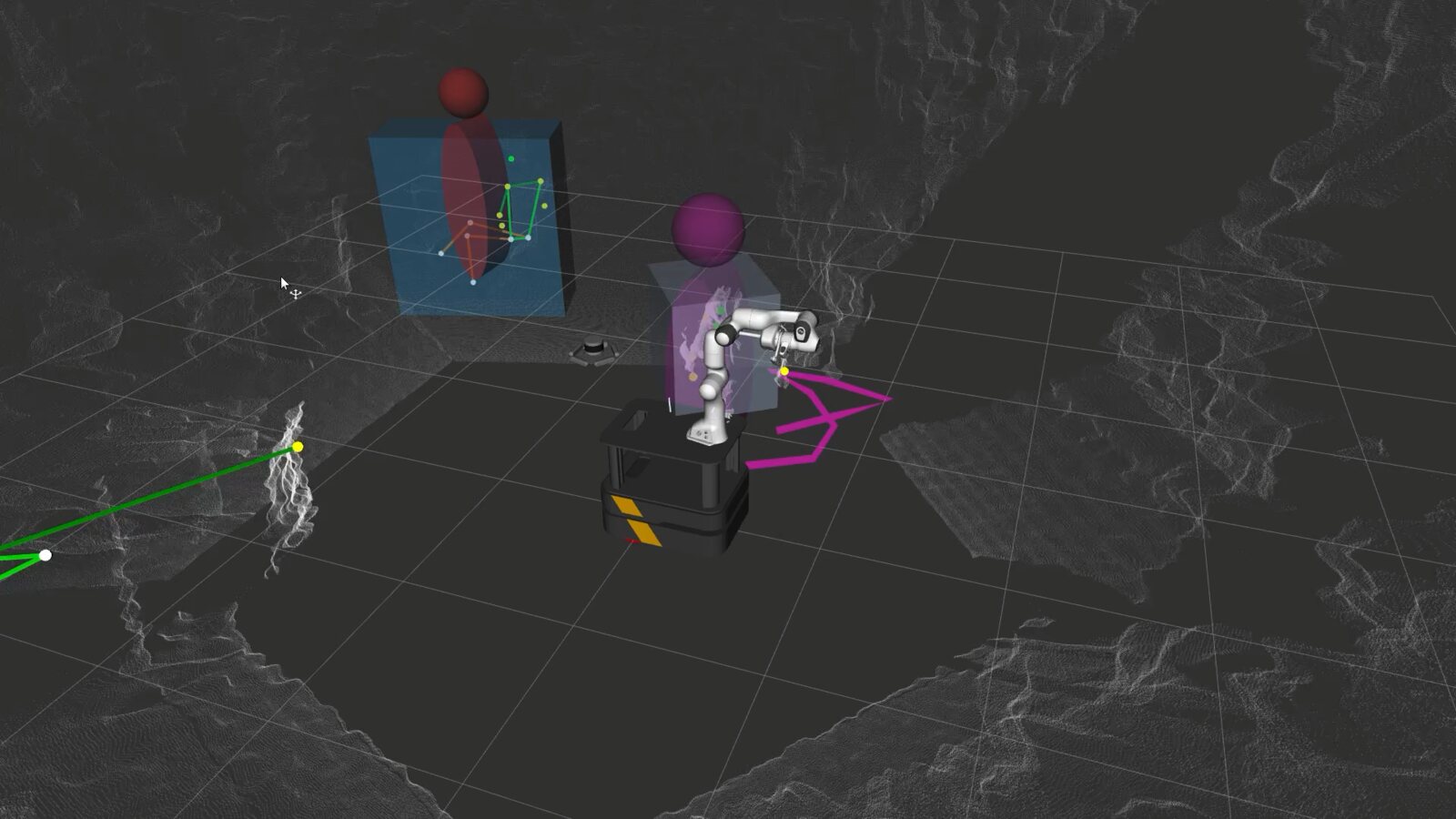
As a research engineer in TU Delft's Cognitive Robotics department, I worked on improving a 3D pedestrian detection pipeline. The work focused on turning sensor observations into spatial detections that could be consumed by the wider robotics system.
Full-body keypoints
I extended the pipeline with full-body keypoint detection. Adding pose information produced a richer description of each pedestrian than a bounding box alone and supported more detailed interpretation of people in the scene.
What shaped my work
This work deepened my experience at the boundary between vision research and robotics integration: perception outputs have to be geometrically meaningful, inspectable and useful to the components that follow.